Backed by
49 supporters from the community.
See all backersThe modern game engine for Java developers.
Code-first. Flexible. Built for creators who want full control.
49 supporters from the community.
See all backers183 contributors across GitHub repositories.
See all contributorsA featured project from the jMonkeyEngine community.
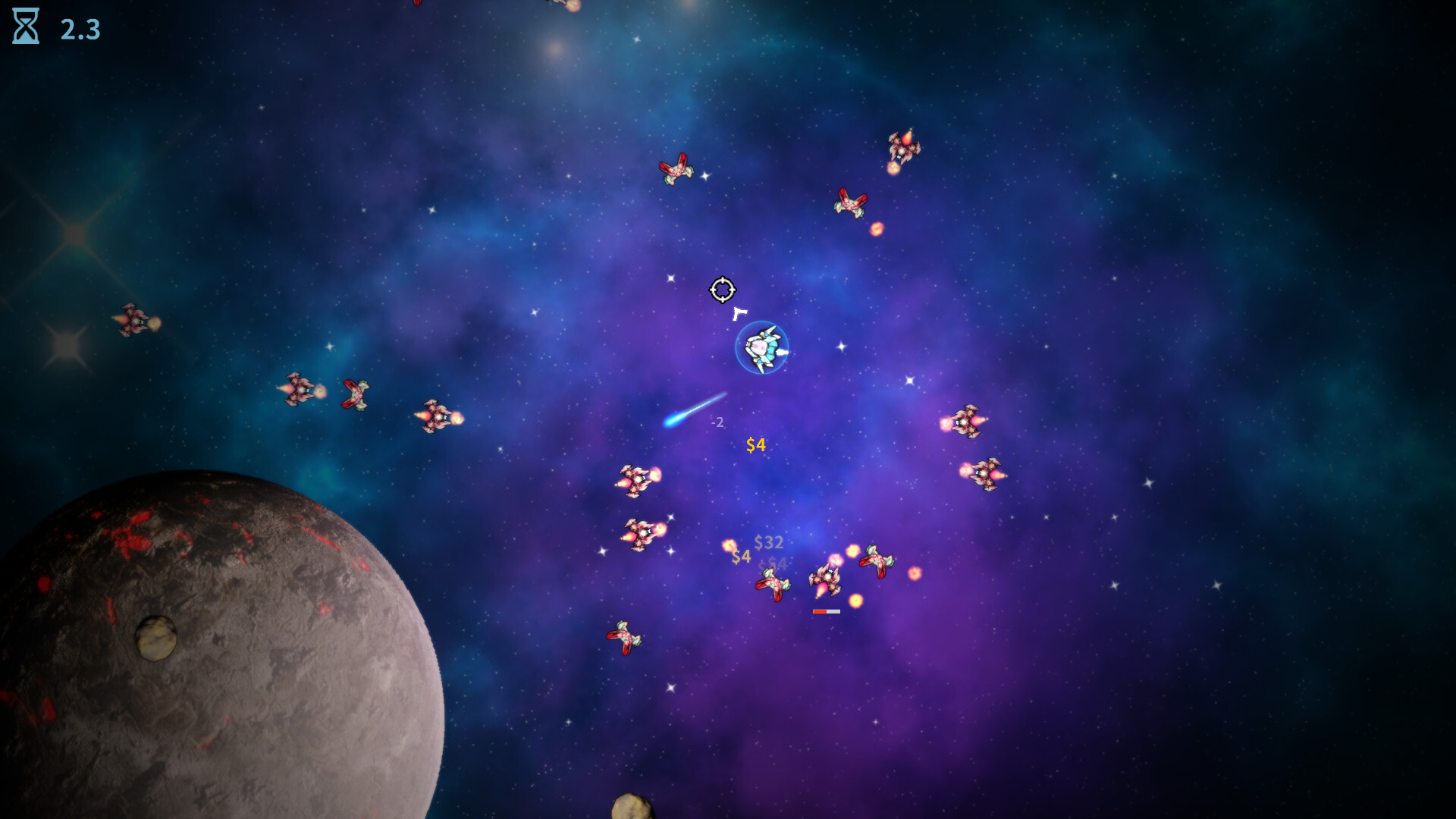
Rapid Escalation is a fast-paced incremental space arena game built around short, explosive battles, permanent upgrades, and exponential growth.
View projectA code-first Java engine with one rendering model, cross-platform targets, networking, audio, UI, assets, and room to build your own pipeline.
Write against one stable GLES 3.0 backend, powered by modern Vulkan, Metal, or DirectX through ANGLE for better portability and testability; or use OpenGL directly from 3.2 up to 4.5.
Coming soon
Build Java games for Windows, macOS, Linux, Android, and iOS, targeting modern x86_64 and ARM64 machines with one engine architecture.
Bring the Java ecosystem into your game: Java 11 through Java 21, Gradle builds, JVM tooling, and the huge world of Java libraries you can use directly in your app.
Real-time multiplayer foundations with TCP, UDP, RPC, synchronization patterns, and room to choose the network model your game needs.
Rigid body, soft body, and vehicle simulation with Bullet, Box2D, or Jolt Physics integration.
Build HUDs, menus, debug panels, and editor interfaces directly inside the engine, using built-in GUI support or community UI toolkits.
Built-in filters for bloom, FXAA, cartoon edges, god rays, SSAO, tone mapping, volumetric light, and custom screen-space effects.
Cross-platform positional audio for games and simulations, with listener-relative sound, attenuation, and spatial scene integration.
Heightmap terrain, paged worlds, voxel environments, iso-surface techniques, and procedural generation can all be built on top of the scene graph.
Built-in particle emitters cover common effects, while the engine remains open enough for custom particles and community extensions.
The engine does not force a single development architecture. Use scene graph controls, app states, ECS-style systems, custom frameworks, or your own hybrid stack.
jMonkeyEngine can be extended for VR and XR projects, with community toolkits covering headset interaction, hand input, and immersive application structure.
Use jME as a foundation for your app, editor, toolchain, or engine, with access to GLES and GL calls plus internals when special requirements need to bend the flow.
Import glTF assets with a workflow aimed at Blender parity, so materials, lighting choices, and scene setup transfer predictably into the engine.
More than 21 years of development and an international dedicated community have grown modules, libraries, plugins, examples, and community projects around a BSD-licensed core.
Latest news from the jMonkeyEngine project.
We’re pleased to announce the release of jMonkeyEngine 3.9.0-stable. This new version addresses a wide range of issues and includes many enhancements …
We are excited to announce the release of JMonkeyEngine 3.8.0-stable. This new version adds many new features and bug fixes, but most notably, this …
A new patch release of JMonkeyEngine arrived on Friday: 3.6.1-stable. This is now the recommended version for all JME projects. Among other things, it …
We're super excited about the new release of JMonkeyEngine that arrived today: 3.6.0-stable. It adds many useful features and solves many past issues. …
We are happy to announce the immediate availability of jMonkeyEngine SDK 3.5! Highlights:Engine version v3.5.2 used internally and by Ant projects.Ant …
A new release of JMonkeyEngine arrived today: 3.5.2-stable. Among other things, it improves our support for armhf platforms --- such as Raspberry Pi …
As of today, there's a new release of JMonkeyEngine: 3.5.1-stable, which improves our support for the new "Apple Silicon" Macs and fixes a couple …
Thank you for your generous contributions to our open-source software project! We're proud to announce general availability of JMonkeyEngine …
Thank you for your contributions to our project! We're proud to announce the release of JMonkeyEngine 3.4.1, which patches a handful of bugs and …
Version 3.4.0-stable of JMonkeyEngine was released to Maven Central on 30 May 2021. For more information, see the Forum announcement:...
Thank you for your contribution(s)! A "stable" version of the v3.3 SDK was released on 5 April: …
Get set up in minutes. No account required, no splash screens, no fees.
Pick the path that fits you: code, docs, testing, or direct support. Every contribution keeps the engine independent and useful for Java game developers.
Fix issues, review pull requests, build features, or help maintain the core and related projects.
Write tutorials, update wiki pages, and turn hard-won knowledge into clear guides for the next developer.
Confirm regressions, file actionable bug reports, and help narrow issues down so fixes land faster.
Support hosting, maintenance, and long-term development. Backers can also leave a homepage message.